Vyborg
For centuries the area around Vyborg saw the bitter rivalry between Russia and its neighbors. The Vyborg Castle, built in 1293 on a small island Linnan-Saari off the Baltic coast, was a powerful Swedish stronghold. The castle was blocking a major trade route between the Russian merchant city of Novgorod and the Baltic Sea, trough the Ladoga Lake via the Vuoksa River and the Russian fortress Karela (the modern-day town of Priozersk).
The castle, with its tall Olaf Tower, was built with the latest fortification technology of the day. The Russian forces of the Principality of Novgorod laid siege to the castle several times but unsuccessfully. In 1318 the army of Novgorod managed to take the castle, but failed to establish tight control over the area and had to retreat.
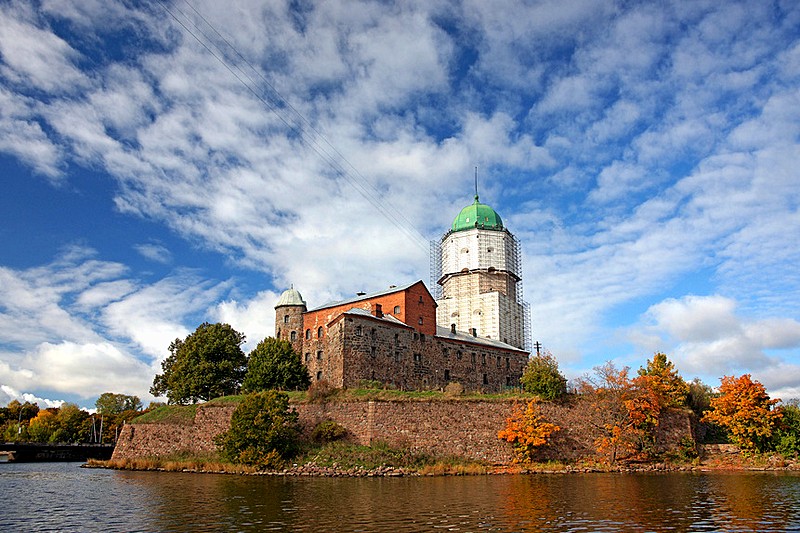
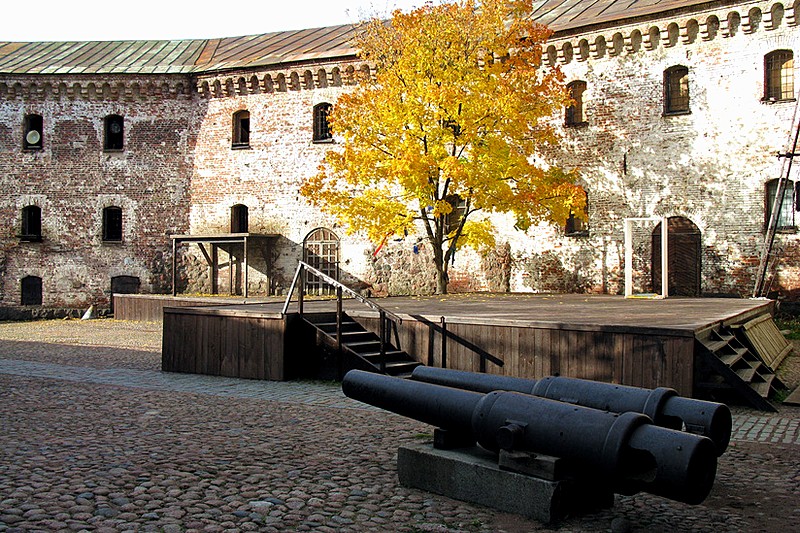
In 1561 the Olaf Tower was rebuilt on the orders of King Gustav Vasa. The tower became a little shorter, but with thicker walls and more powerful defenses. In 1564 additional fortifications were added, including outer walls and powerful bastions paved with stone.
The lively medieval town of Vyborg, located opposite the castle, was fortified as well. This part of the town is still referred to as "the Old Town" and retains much of its medieval character. Several towers in the Old Town used to be part of the town fortifications, built in the late 14th century - early 15th centuries and expanded in 1547-50. The most famous is definitely the Round Tower ("Fat Catherine"), which now stands on the Market Square. The tower was built of large stones and was strong enough to hold canon on several levels.
The only remaining feature of the later fortifications is Bastion Panzerlaks, which was part of the powerful "Horn Fortress" (its bastions, seen from an elevation, looked like horns). The rest of the fortress was torn down in the 19th century.
When Peter the Great founded St. Petersburg in 1703 and Russia gained access to the Baltic, all Swedish outposts in the area were captured. In 1706 the first ground assault on Vyborg failed, but in 1710 Peter the Great summoned 13,000 troops and 250 ships for a combined army and navy attack on the fortified town and castle. On June 12 1710, after a heavy bombardment, the Swedish garrison surrendered. With the construction of yet more fortifications, Vyborg maintained military significance till the early 19th century.
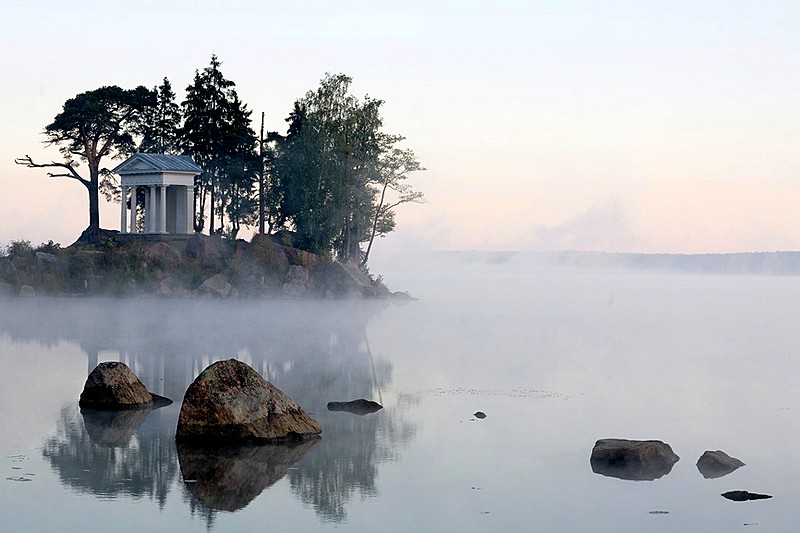
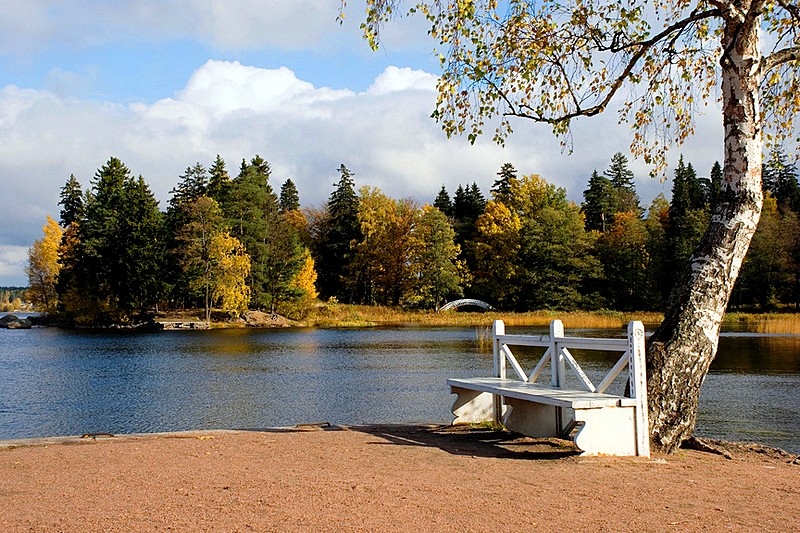
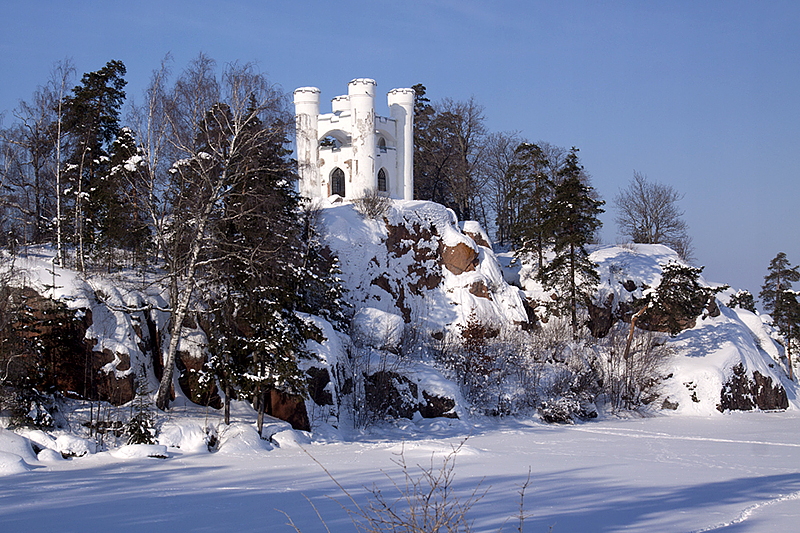
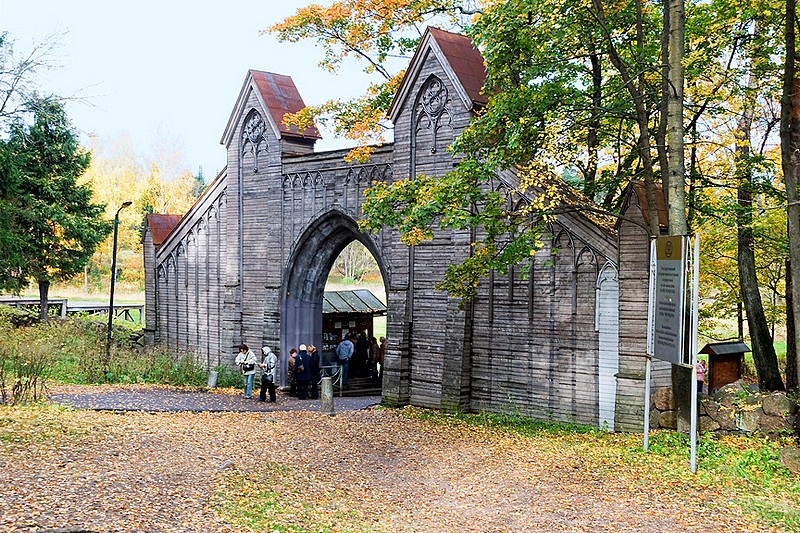
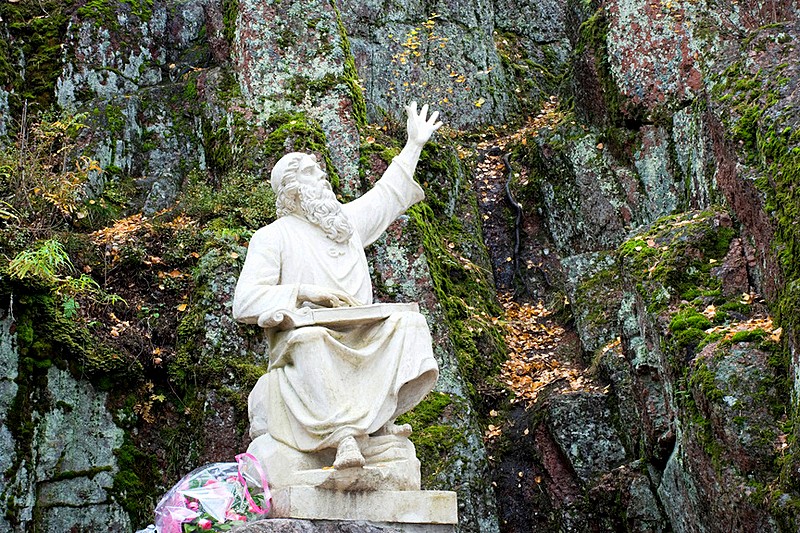
The main civil landmark of Vyborg and the surrounding area is the "Monrepos" estate. The estate was founded by the military commandant of Vyborg, but was soon acquired by the governor of the province, who used it for hosting spectacular feasts. The name of the estate reflected the owner's character and attitude towards his government business ("Mon Repos" in French means "my leisure"). The estate came to the peak of prominence under the ownership of the Nikolai family after Ludwig von Nikolai became the secretary first to Paul I and then to the Dowager Empress Maria Fedorovna. It was in this period that the stylish wooden mansion was built and the park was decorated with its numerous follies.
Vyborg is 174km northwest of St. Petersburg, and can easily be reached by train. Roughly five express trains a day leave from Finlandskiy Station and take around 1hr 50mins to reach Vyborg. Buses are also available, although most services to Vyborg are on the way to Helsinki or other Finnish destinations, and arrive in Vyborg late at night. Eurolines and Ardis offer bus services stopping in Vyborg.