Grand Palace
Antonio Rinaldi, the architect who designed the original Grand Palace for Count Grigoriy Orlov, studied and worked in his native Italy under Luigi Vanvitelli, probably that country's greatest neoclassical architect. While traveling in England, from where he took a great deal of the inspiration for Gatchina's Grand Palace and Park, Rinaldi received a commission from hetman Kirill Razumovsky to build a royal residence at the old capital of Baturin. From there he moved on to St. Petersburg, where he became attached to the Imperial Court of the future Peter III, for whom he designed a palace at Orenienbaum. After Peter's deposition and Catherine the Great's ascension to the throne, Rinaldi became the 'pet' architect of Catherine's lover and political ally, Grigoriy Orlov, building for him simultaneously the Grand Palace at Gatchina and the count's St. Petersburg residence, the Marble Palace.
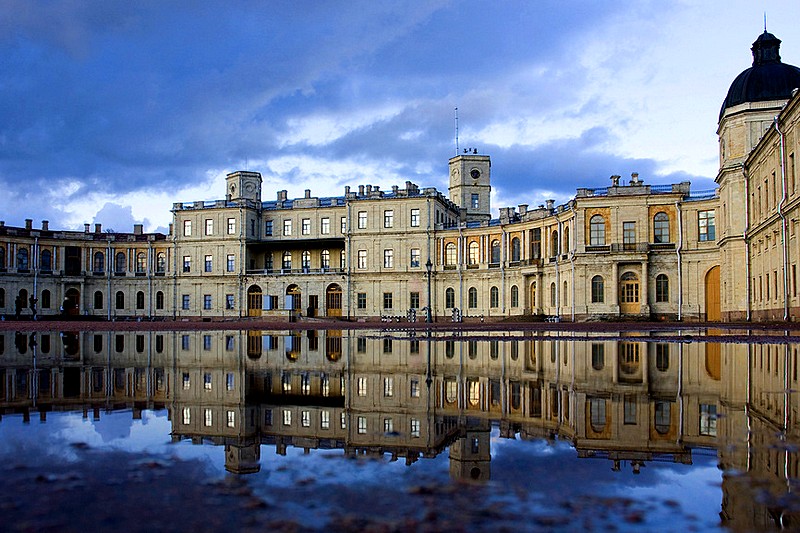

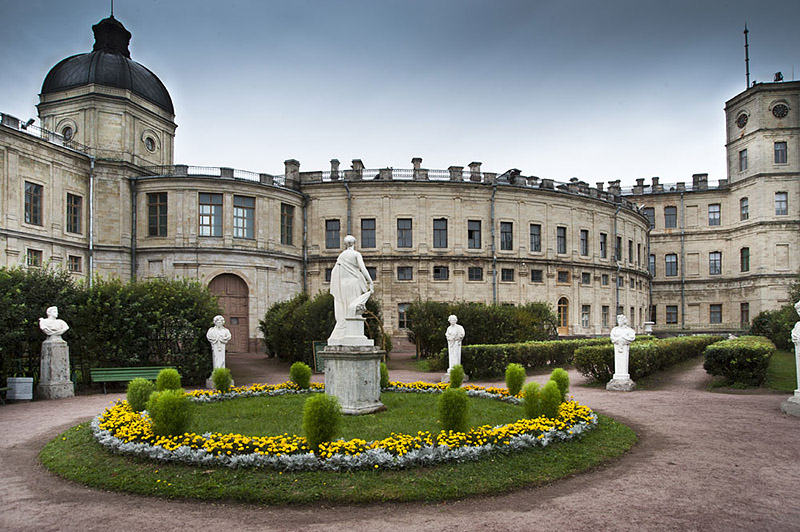
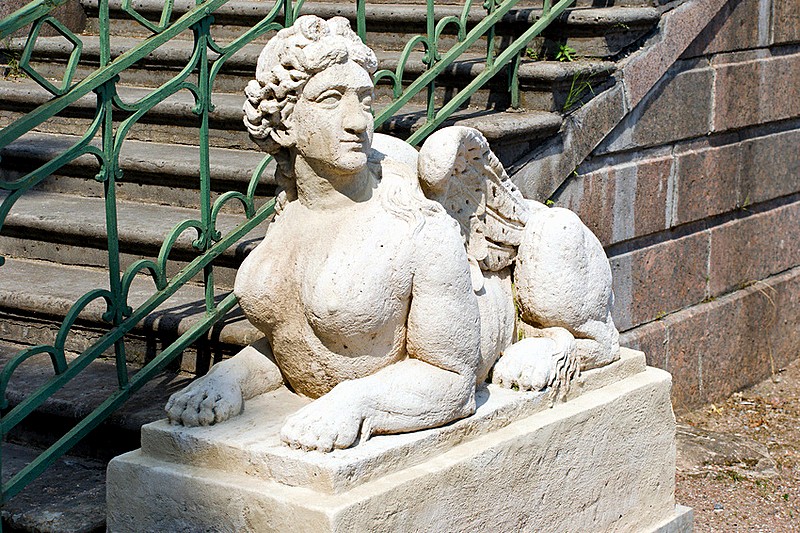
At Gatchina, Rinaldi drew inspiration from his travels in England and his work with his tutor Luigi Vanvitelli on Charles VII of Naples' Caserta Palace. The conceit of the project was to create a 600-room palace in the style of a knight's castle, with elements of a royal hunting lodge and an English stately home. Using weathered limestone, Rinaldi designed a building that is both imposing and welcoming, presenting a sweeping semi-circular facade of classical simplicity on one side, and a more fanciful rear, with two slim hexagonal towers creating the atmosphere of a medieval castle.
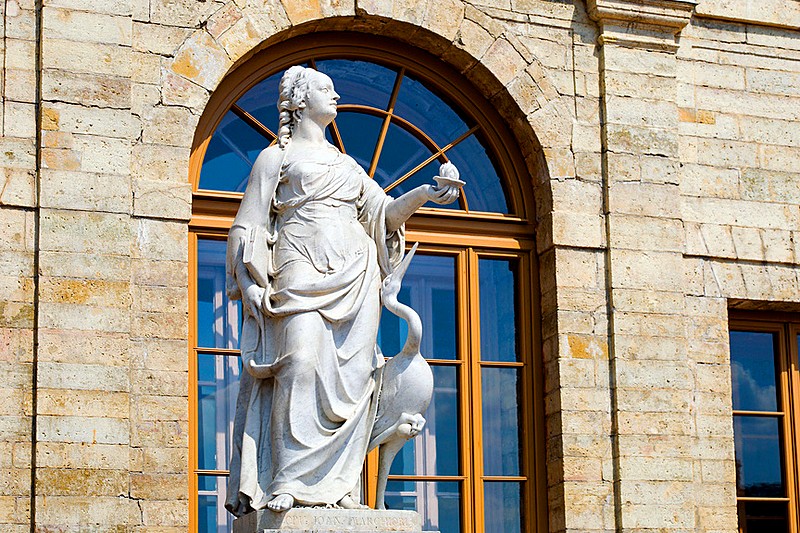
By the time the palace was completed in 1781, Orlov had long fallen out of favour with Catherine and had only a couple of years to live, tormented by his role in the assassination of Peter. Rinaldi's design, however, pleased Catherine enough for her to buy Gatchina back from Orlov's heirs, and present it to her son, the future Pavel I. Whatever distaste Pavel may have felt at receiving the former home of his father's murderer was overcome by his delight in the building's fortress-like design, which appealed to his fascination for all things military. Pavel commissioned his own favourite architect, Vincenzo Brenna, who had already reworked the Grand Palace at Pavlovsk for him, to expand Gatchina. Brenna proved adept at matching the Tsar's esoteric tastes while retaining the spirit of Rinaldi's original design, heightening the palace's galleries and side blocks, and adding details such as cannons, sentry boxes and a moat around the palace that enhanced fortress-like character of the building.
The interiors of the palace were mostly Brenna's work, too. In this capacity, he worked in a style that combined high rococo decoration with neoclassical symmetry, and created interiors far more lavish than the building they are housed in. While the damage wrought by the Nazis has only partly been redressed, and restoration is ongoing, fine examples of his work can be found in the elegant Marble Dining Room and the superbly ornate White Hall, both of which feature a wealth of stucco decoration and fabulous parquet floors.
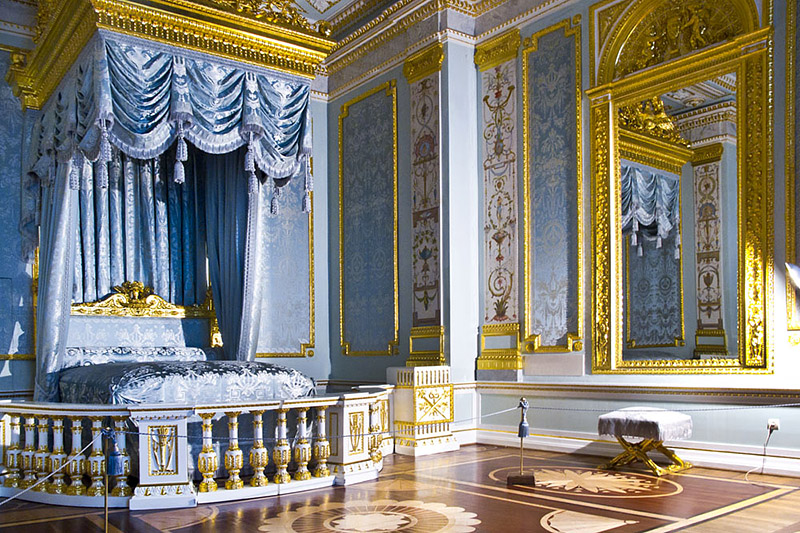
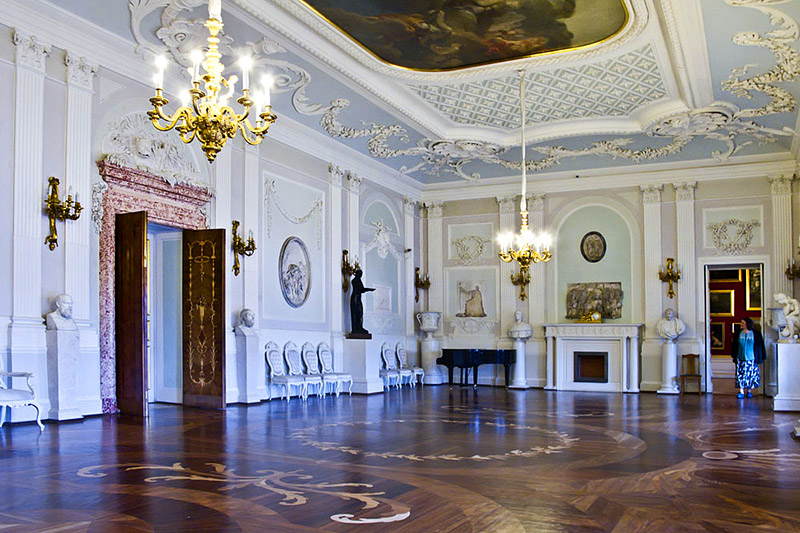
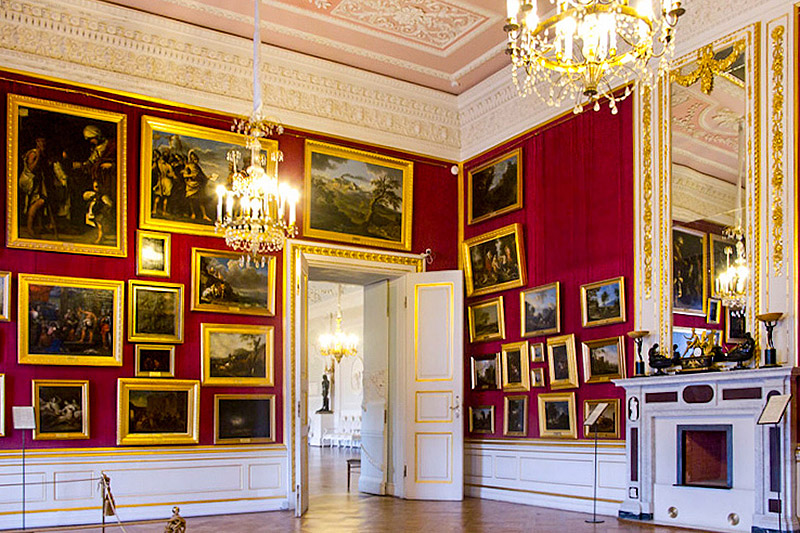
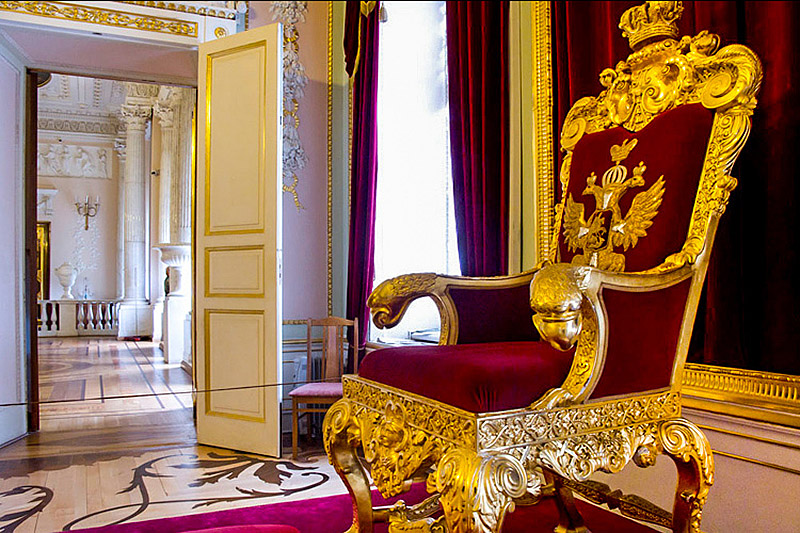
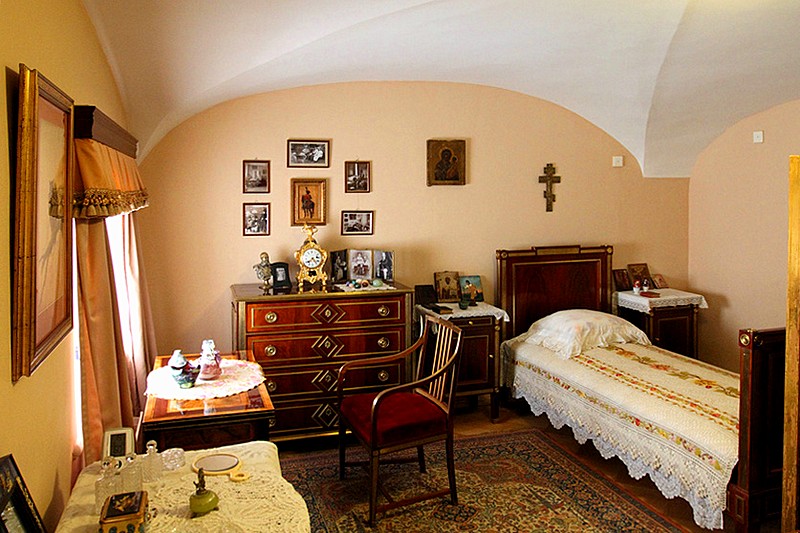
Further alterations were made to the Grand Palace during the reign of Nicholas I, who employed architect Roman Kuzmin to remodel the side-blocks of the palace, setting up his private quarters in the Arsenal Block. Neither the interiors there, nor any complete records of them, have survived. However, the works of watercolourist Edward Gow, which beautifully capture the majority of the palace's interiors from Nicholas' reign, are on display in the palace. Nicholas also commissioned the impressive statue in honour of his father that stands in front of the palace's main entrance.
Among other displays of interest housed in the Grand Palace, the Exhibition of Weaponry has over 1000 items of ceremonial arms and armour that once belonged to the Imperial family. Like many of the other suburban palaces, Gatchina also displays several fine 18th and 19th century works from the renowned Imperial Porcelain Factory.
| Open: | June 15 to August 31: Daily, 10 am to 7 pm. Last admission is at 6 pm. Closed on July 7 and August 4. September 1 to June 14: Daily, 10 am to 6 pm. Last admission is at 5 pm. Closed on Monday and the first Tuesday of each month. |
|---|---|
| Admission: | RUB 300.00. Children: RUB 150.00 |
| Photo and video: | RUB 100.00. Audio-guide: RUB 200.00 |
| Accessibility note: | Sorry, this museum is not wheelchair accessible. |